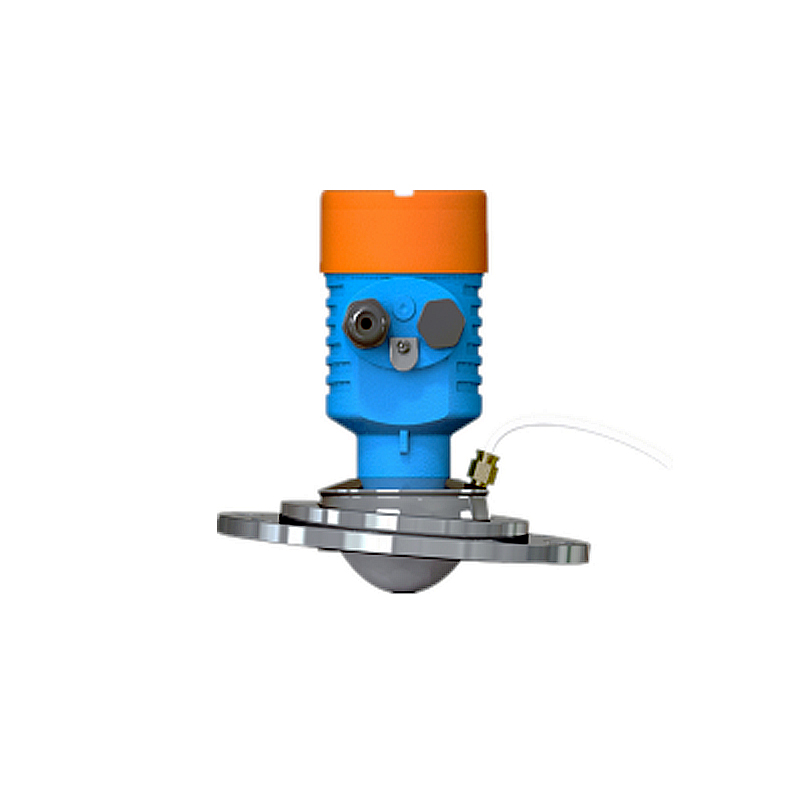
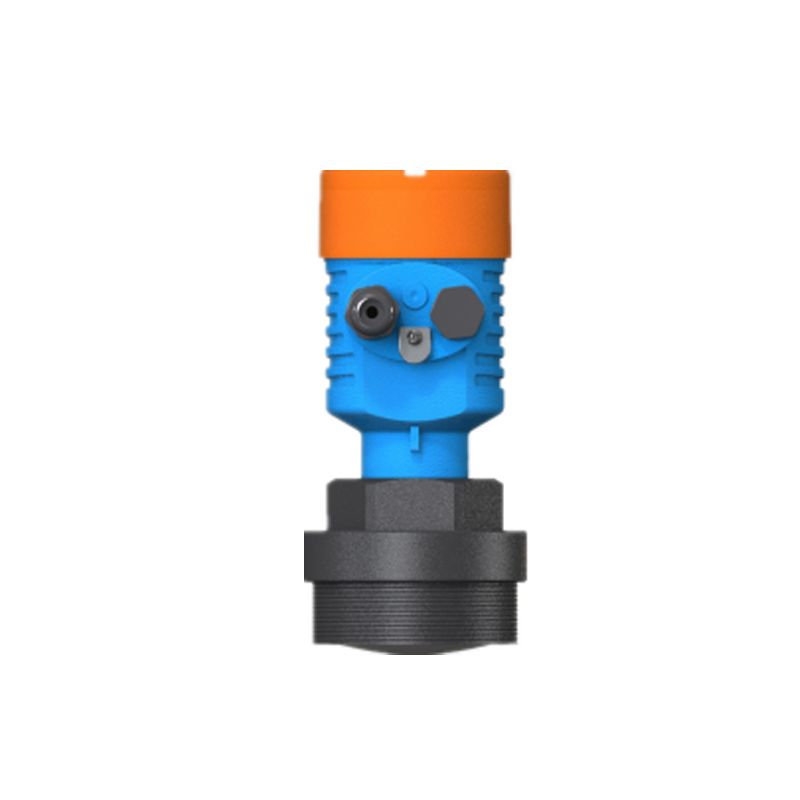
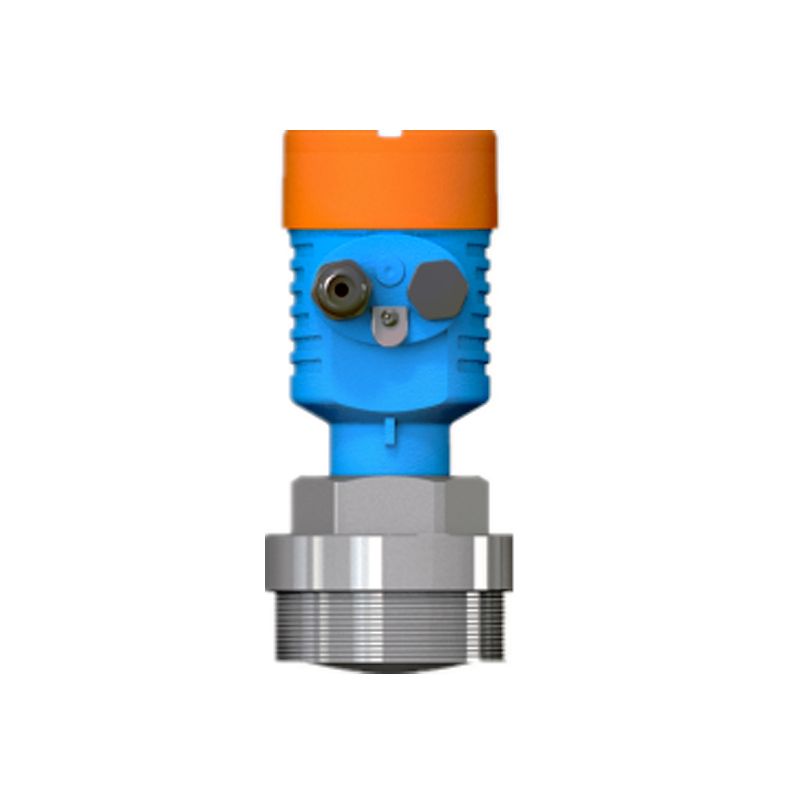
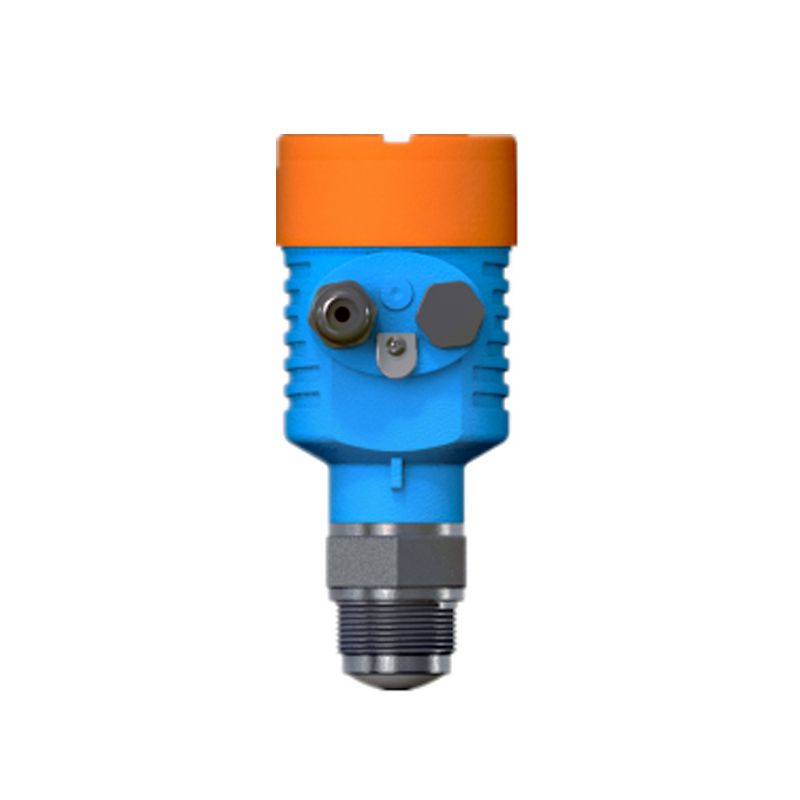
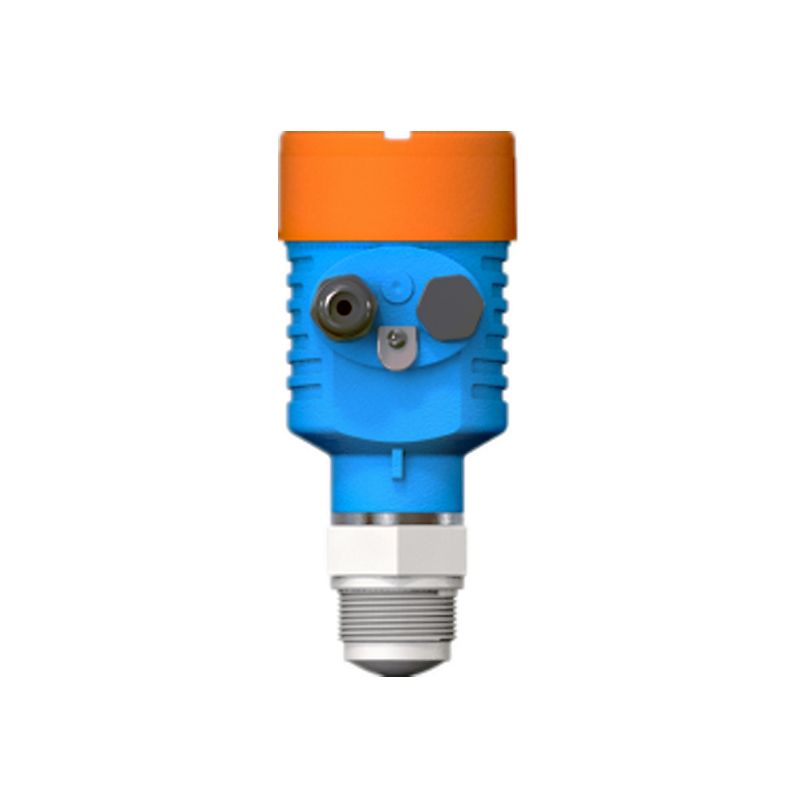
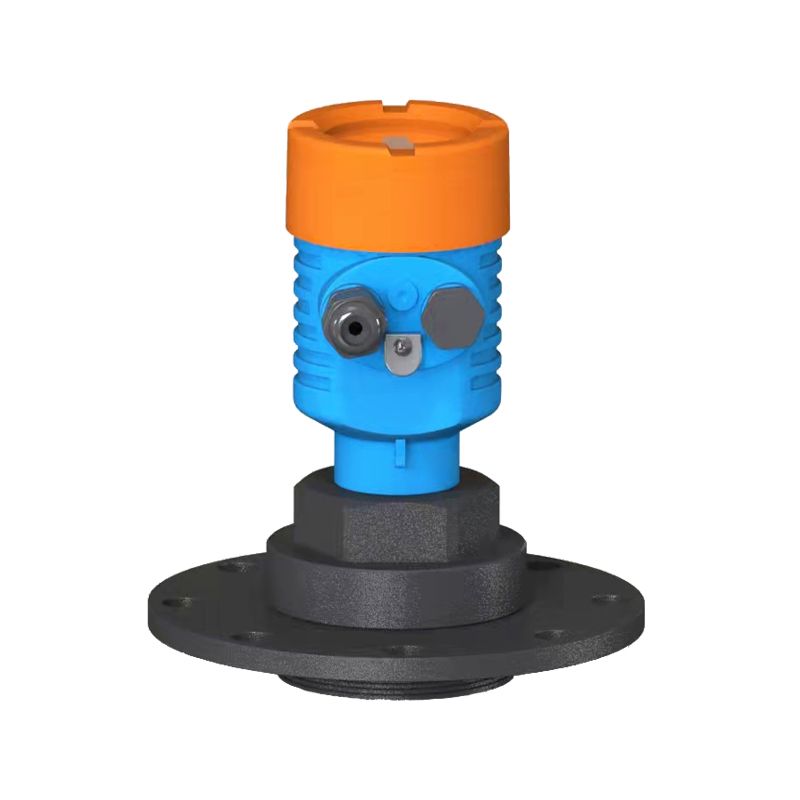
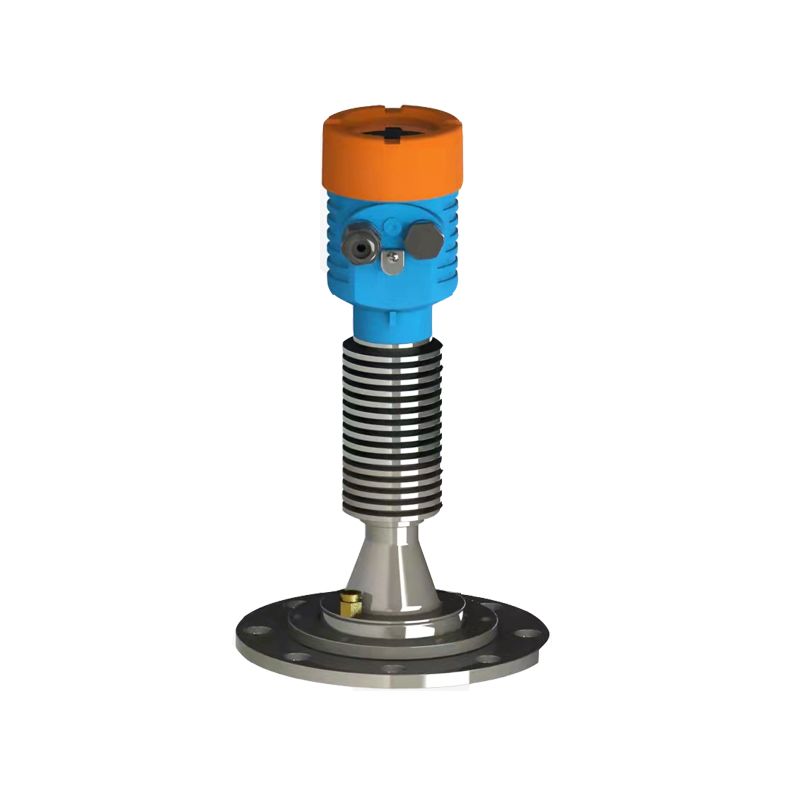
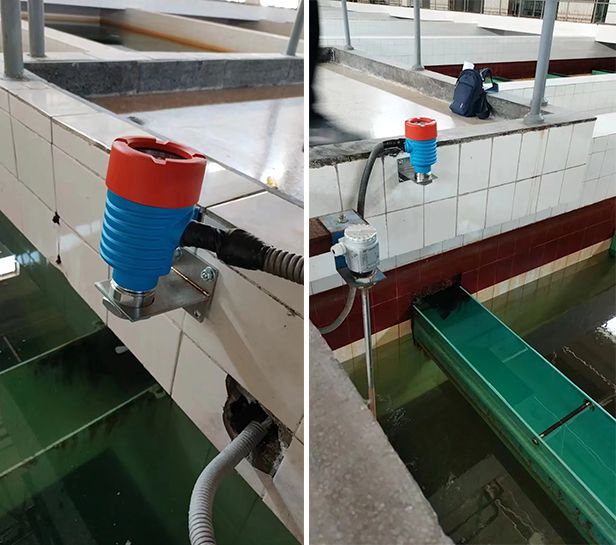
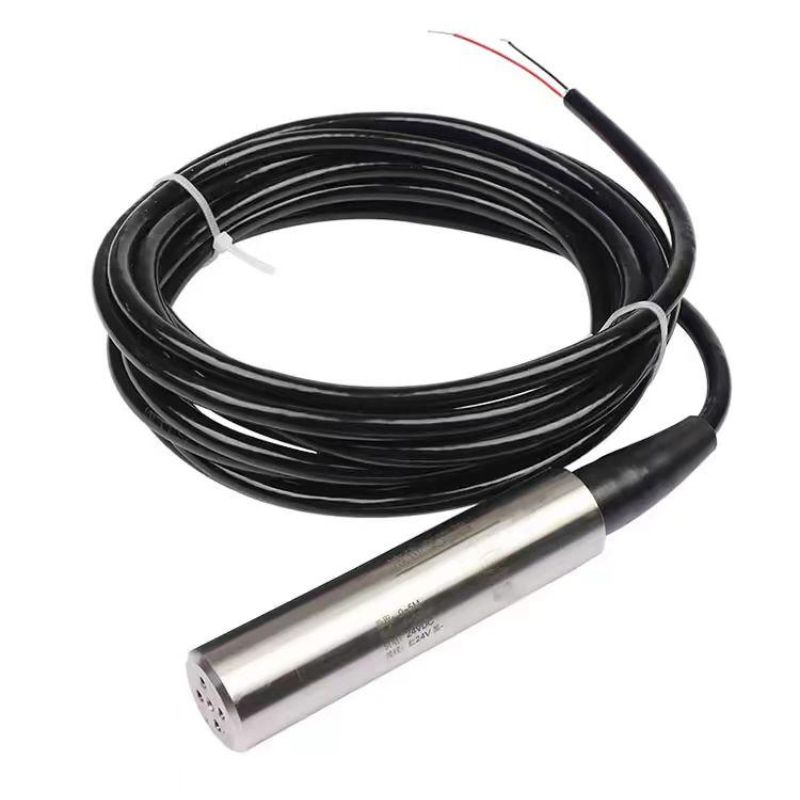
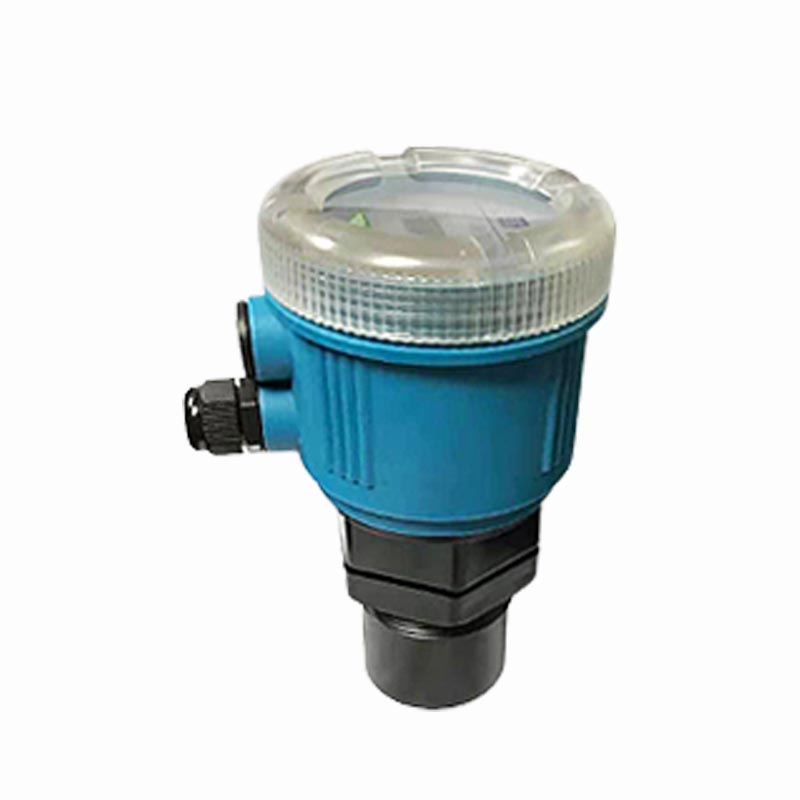
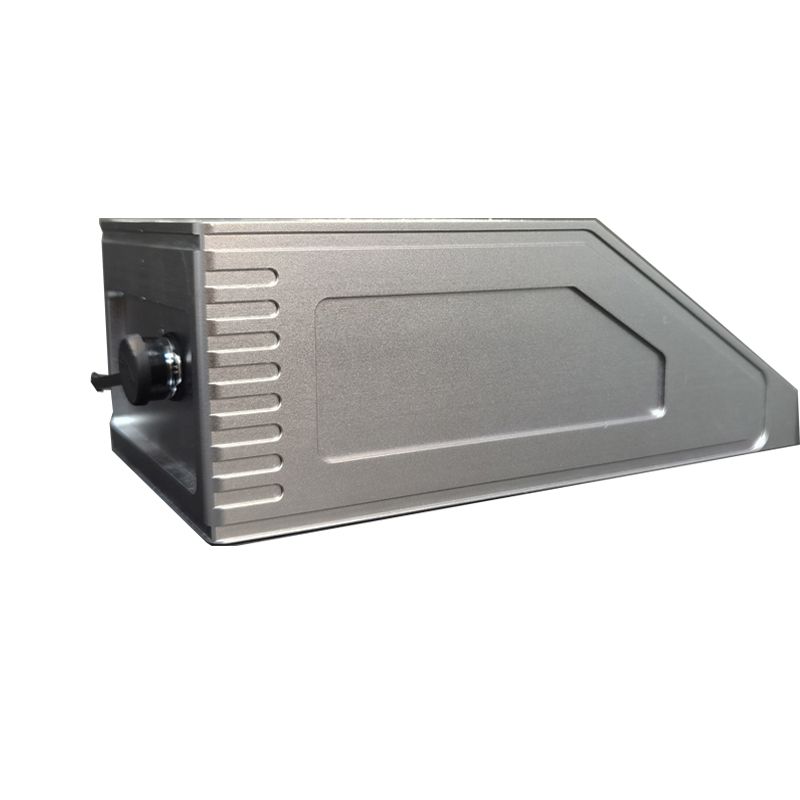
Host Dimension:(unit: mm)
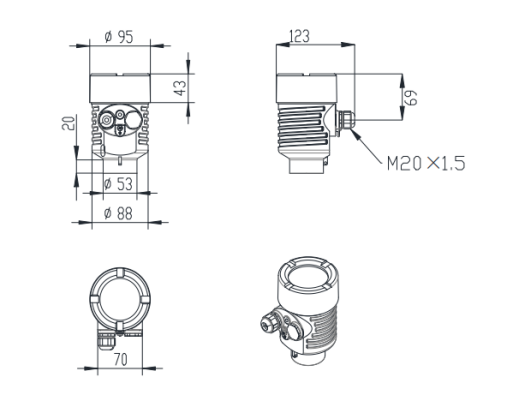
Probe Dimension:(unit: mm)
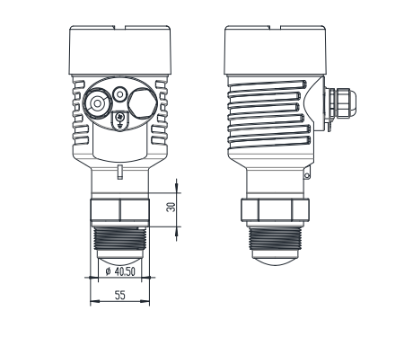
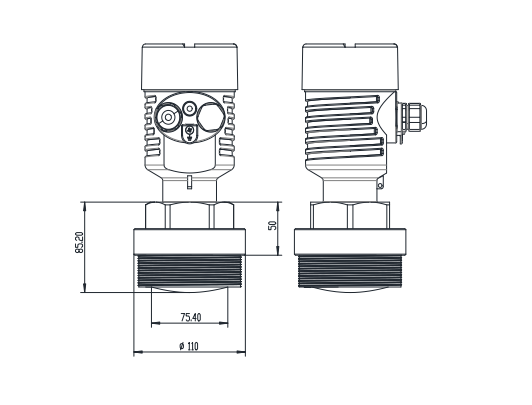
GRD-80G Radar Level Transmitter Models and Specifications
The following table compares the measurement range, accuracy, beam angle, temperature and pressure conditions, and protection class for liquid, solid and different antenna configurations.
| Model | Medium | Measurement Range | Accuracy | Beam Angle | Temperature and Pressure | Protection Class | Photo |
|---|
| GRD-80G-01 | Liquids, especially corrosive liquids | 0.15m~15m | ±2mm | 5-8° | -40~80℃ / Max 2.5MPa | IP67 |  |
| GRD-80G-02 | Liquids | 0.15m~35m | ±2mm | 5-8° | -40~80℃ / Max 2.5MPa | IP67 |  |
| GRD-80G-03 | Solids | 0.3m~120m | ±2mm | 3° | -60~120℃ / Max 2.5MPa | IP67 |  |
| GRD-80G-05 | Liquids, especially corrosive liquids | 0.15m~15m | ±2mm | 5-8° | -40~80℃ / Max 2.5MPa | IP67 |  |
| GRD-80G-07 | Solids | 0.3m~120m | ±2mm | 3° | -60~150℃ / Max 2.5MPa | IP67 |  |
| GRD-80G-08 | Solids | 0.3m~120m | ±2mm | 3° | -60~200℃ / Max 2.5MPa | IP67 |  |
Effects of Foam, Dust, Steam, Condensation, Agitation and Adhesion on Measurement
1. Foam
a. Thin foam (<5 cm): The 80G millimeter-wave can penetrate the foam layer and capture the water-surface echo normally, so the measurement remains basically stable.
b. Thick, dense wet foam (>10 cm): Due to the high dielectric constant of foam, the radar wave tends to reflect on the top surface of the foam. The foam top may be misidentified as the actual water surface, leading to an over-estimated water level and falsely high flow rate. Turbulently rolling foam causes signal scattering, resulting in frequent jumping and large fluctuation of readings.
c. Dry foam and lightweight floating bubbles: The radar signal has good penetration, with little interference to measurement.
2. Dust
a. Slight dust emission: The narrow-beam 80G radar is barely affected and can perform normal measurement.
b. High-concentration, continuous dust: Dust particles scatter and absorb high-frequency millimeter-wave energy, which attenuates the radar signal, weakens the echo and reduces the signal-to-noise ratio. In severe cases, the echo signal is lost, and the measured value jumps with unstable data output.
3. Steam
a. A small amount of water mist at ambient temperature: Hardly any influence on measurement.
b. High-temperature saturated steam: Water vapor absorbs millimeter-wave energy and causes signal attenuation. When steam meets the cold radar antenna, a condensed water film will form on the antenna surface, which changes the antenna transmission characteristics, leads to water-level drift and increased measurement error. Under extreme conditions, no valid echo can be received and measurement fails.
4. Condensation
Condensation includes condensation on the antenna surface and water condensation on the inner tank wall.
a. A continuous water film formed on the antenna lens: The radar wave reflects directly on the water film, resulting in serious measurement distortion, permanently high water-level reading and measurement failure.
b. Intermittent condensation and dripping water droplets: Instantaneous false echoes are generated, which occasionally cause value jump and unstable measurement data.
5. Agitation
a. Agitation causes severe water-surface fluctuation and vortexes. The water level keeps rising and falling, and the instantaneous water-level reading drifts constantly.
b. If the agitator blade falls within the radar beam coverage, strong false echoes will be reflected by the blade. The instrument may mistake the blade position for the water-surface level, which causes considerable measurement error.
Note: The 80G radar features a narrow beam. Interference can be greatly reduced as long as the installation position keeps the agitator blades out of the radar beam.
6. Adhesion (Material Buildup, Sludge, Oil Contamination on Antenna)
When sludge, oil or viscous medium adheres to the transmitting surface of the radar antenna:
a. The antenna impedance is changed, the transmitting and receiving performance of radar signals deteriorates, and the echo intensity decreases.
b. The radar wave is directly reflected by the surface of the adherent material. The instrument locks the distance to the adherent, the measured value stays fixed and fails to respond to the real-time water-level change, resulting in complete measurement failure.
c. Thicker adherent deposits lead to larger measurement error. Antenna adhesion is one of the most common causes of failure for radar flowmeters.
Installation Requirements
Recommended Installation Location
Installed at the diameter of the silo (1/4-1/6), keep a minimum horizontal distance of 200mm from the silo wall, otherwise it is likely to produce false readings, and the instrument needs to be installed vertically (flange surface horizontal) when measuring liquids.
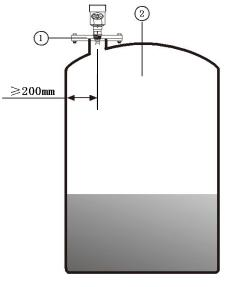
Note:
(1) Datum
(2) Container center or axis of symmetry
The silo body with stockpile is perpendicular to the incident surface.
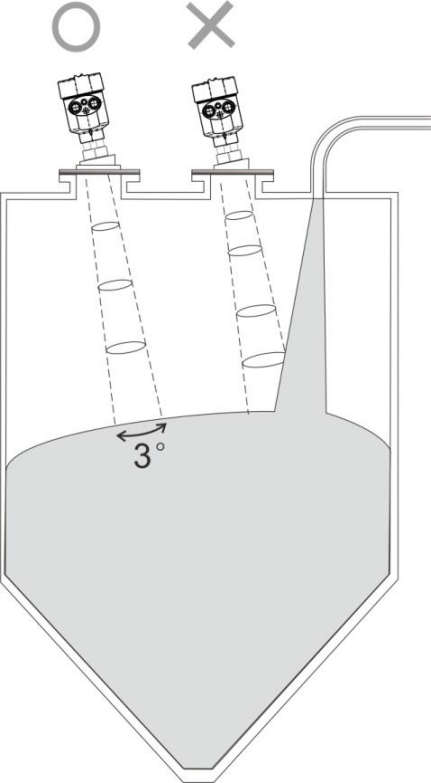
Because the inclined solid surface will cause echo attenuation, and even the problem of loss of signal, the lens antenna should be as perpendicular as possible to the material surface. If the material surface is uneven, the universal flange is recommended to adjust the angle of the lens antenna.
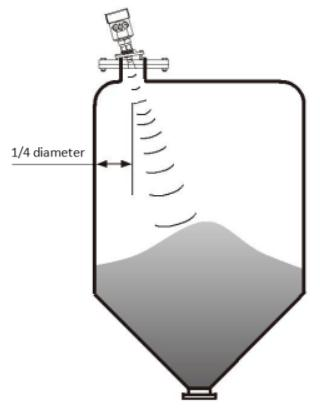
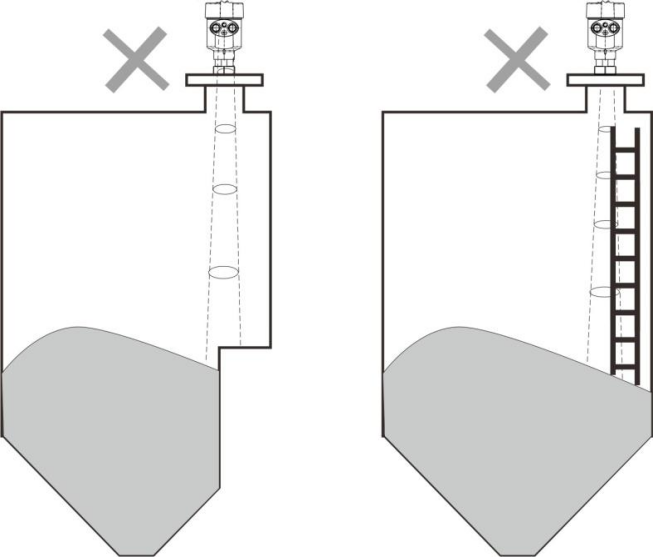
Typical Installation Errors
Ensure that there are no interferences in the beam range, such as ladders, steps, etc. As shown in the figure below:
When measuring solid materials, the instrument should be installed to ensure that the antenna beam avoids the feed port and is perpendicular to the material surface, as shown in the figure below:
Why Choose GALLOP?
Beijing Gallop High & New Tech Co., Ltd. has been a trusted name in industrial instrumentation since 2005. With
"Quality Is Our Culture" as our core value, we specialize in level transmitters, flow meters, pressure transmitters, and temperature sensors — delivering reliable process automation solutions to customers worldwide.
Our Core Strengths
✦ Decades of Industry Expertise: With nearly 20 years of dedicated experience in liquid level and flow rate measurement, we have built a solid reputation serving companies across the globe. Our deep understanding of diverse industrial applications ensures you get the right instrument for every working condition.
✦ Strong R&D & Customization Capabilities: Our in-house R&D team continuously develops new products to meet evolving market demands. We offer comprehensive OEM/ODM services — including custom sizes, housing colors, labels, system interfaces, and startup screen branding. We also provide tailored on-site measurement solutions, selecting the optimal product configuration based on your specific media, temperature, and pressure requirements.
✦ Rigorous Quality Control & International Certifications: Every product undergoes strict incoming material inspection, online functional testing, and comprehensive pre-shipment checks (accuracy, insulation, communication, protection rating, display, appearance, and packaging). Our manufacturing fully complies with ISO 9001:2015, and our products carry CE certifications and explosion-proof certificates, with traceability to national measurement standards.
✦ Proven Global Market Presence: Our products are trusted in over 30 countries and regions, including the United States, Saudi Arabia, UAE, Kuwait, Austria, Chile, Australia, Spain, Mexico, South Korea, India, Indonesia, Vietnam, and Thailand. Our sales team ensures smooth communication and professional service for international buyers.
✦ Comprehensive After-Sales Support: We provide 24-hour rapid response service, lifetime technical support, and factory calibration, maintenance, and upgrade services — ensuring your instruments perform reliably throughout their entire lifecycle.